
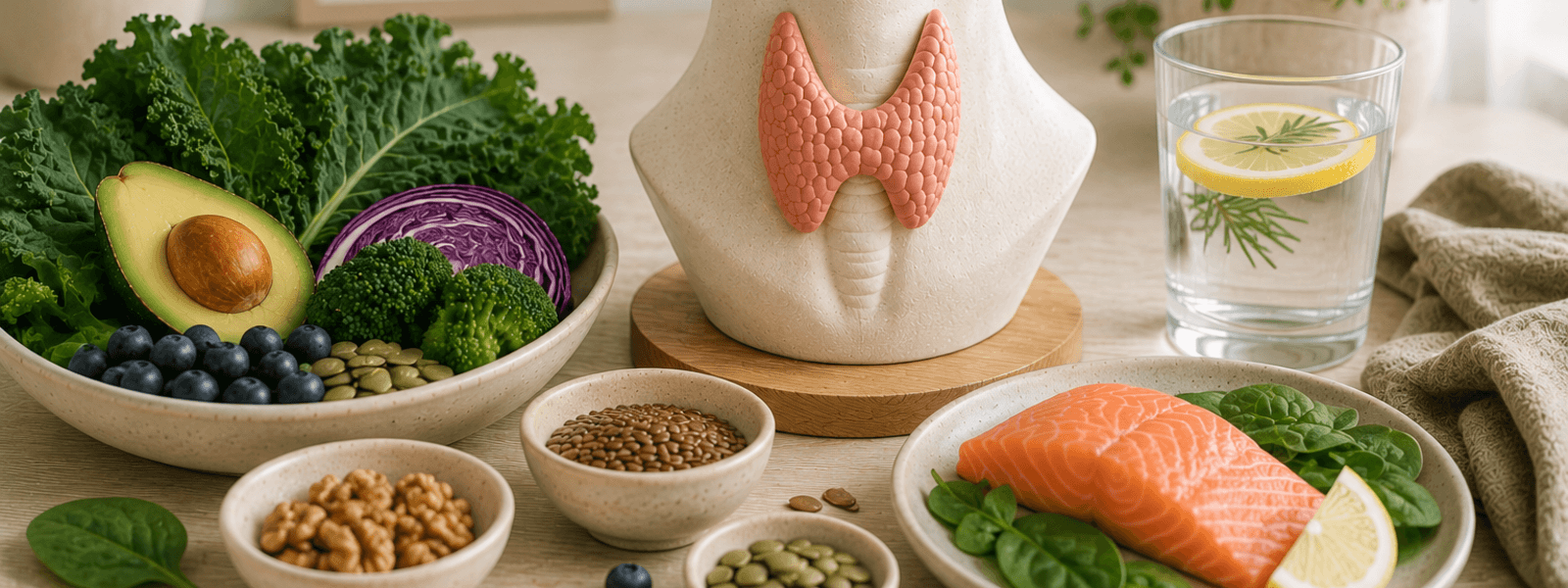
Auto Immune Thyroid Nutrition
Nutrition for Autoimmune Thyroid Health
Get in Touch With Us!
We aim to get back to you in 24 hours.
Living with autoimmune thyroid disease can make nutrition feel far more complicated than it needs to be.
You may have been told to stop eating gluten, remove dairy, avoid soya, take selenium, increase iodine or follow a restrictive autoimmune diet. When every source seems to offer different advice, knowing where to start can be difficult.
At Autoimmune Thyroid Nutrition, we take a more individual approach.
We look at your existing diet, nutritional intake, food restrictions and lifestyle to help you develop a balanced and practical way of eating alongside appropriate medical care.
Nutrition for Autoimmune Thyroid Disease
Autoimmune thyroid disease occurs when the immune system mistakenly targets the thyroid gland.
Hashimoto’s thyroiditis is the most common form of autoimmune thyroid disease associated with hypothyroidism, and the NHS identifies Hashimoto’s disease as the main cause of an underactive thyroid in the UK.
Nutrition doesn't replace medical treatment for autoimmune thyroid disease.
Instead, our focus is on helping you ensure that what you eat provides balanced nutrition while addressing the dietary questions that commonly arise after a diagnosis.
Support can include:
- Reviewing your current diet
- Hashimoto’s nutrition
- Dietary variety
- Protein and fibre intake
- Gluten and coeliac considerations
- Dairy and other food restrictions
- Iodine intake
- Selenium and zinc
- Iron and vitamin B12
- Vitamin D
- Supplement reviews
- Weight-management nutrition
- Vegetarian and vegan nutrition
- Meal planning
- Nutrition alongside levothyroxine
Start With What You're Eating Now
Before deciding what needs to be removed, we start by looking at what's already on your plate.
Are your meals varied?
Where does your protein come from?
Are you eating enough fibre-rich foods?
Have you removed several food groups?
Are you relying heavily on supplements?
Could your diet contain a wider range of nutritious foods?
This creates a much clearer picture of your nutrition than immediately putting you on a generic autoimmune eating plan.
Our philosophy is simple:
Assess → understand → improve → personalise
Explore Personalised Thyroid Nutrition
Hashimoto’s Nutrition
Hashimoto’s thyroiditis is an autoimmune condition in which the immune system attacks the thyroid, which can eventually result in insufficient thyroid hormone production.
It is also surrounded by a huge amount of dietary information.
Search for a Hashimoto’s diet and you'll encounter elimination programmes, autoimmune protocols, supplement regimes and lists of supposedly inflammatory foods.
But there isn't one specific thyroid diet recommended for everyone diagnosed with a thyroid condition. The British Thyroid Foundation states this explicitly.
That makes personalisation particularly important.
Do You Need an Autoimmune Diet?
Not necessarily.
Highly restrictive autoimmune diets can remove multiple food groups simultaneously.
For some people, dietary restrictions are necessary because of a diagnosed condition, allergy or other individual requirement.
But we don't automatically assume that everybody with autoimmune thyroid disease needs to eliminate the same foods.
Instead, we consider:
What are you currently restricting?
Why did you remove it?
What nutrients did that food provide?
What have you replaced it with?
Has your overall diet become too limited?
Sometimes improving an autoimmune thyroid diet isn't about removing another food.
It can be about putting greater variety back in.
A Food-First Approach
Supplements receive enormous attention in the thyroid-health world.
But food remains the foundation of a balanced diet.
Depending on your dietary requirements, this can mean incorporating a varied selection of:
Protein Sources
Fish, eggs, meat, beans, lentils, chickpeas, dairy and appropriate plant proteins.
Vegetables and Fruit
Different varieties provide fibre alongside a broad range of nutrients.
Higher-Fibre Carbohydrates
Foods such as potatoes, oats, rice, bread, pasta and wholegrains can contribute to a balanced diet.
Healthy Fats
Nuts, seeds, olive oil, avocado and oily fish can provide sources of unsaturated fats.
Dairy or Alternatives
These can be selected according to your individual diet and requirements.
The aim isn't to find a collection of foods capable of “healing” autoimmunity.
It's to create a nutritionally balanced diet you can actually maintain.
Gluten and Autoimmune Thyroid Disease
Gluten is probably one of the most discussed foods in relation to Hashimoto’s.
Autoimmune thyroid disease and coeliac disease can occur together, which is one reason the subject receives attention.
However, this doesn't mean everybody with Hashimoto’s automatically needs to follow a gluten-free diet.
If you have diagnosed coeliac disease, strict avoidance of gluten is necessary.
Otherwise, a thyroid diagnosis alone doesn't establish that gluten needs to be removed.
The British Thyroid Foundation notes that evidence for exclusion diets without an underlying clinical diagnosis such as coeliac disease is weak.
If you're considering removing gluten because of symptoms, discussing appropriate testing with your GP before changing your diet may also be useful.
Already Gluten-Free?
If you've already eliminated gluten, we can look at the foods you've introduced in its place.
For example:
Are you still getting enough fibre?
Have wholegrains disappeared from your diet?
Are your replacement products nutritionally appropriate?
Are you relying heavily on highly processed gluten-free alternatives?
The objective isn't simply to remove foods — it's to maintain the quality of the diet that remains.
Dairy and Hashimoto’s
Dairy is another common target of autoimmune elimination diets.
But autoimmune thyroid disease itself doesn't automatically require a dairy-free diet.
If you eat dairy without problems and have no diagnosed reason to avoid it, it can contribute nutrients including protein and calcium.
If dairy isn't part of your diet, we can consider suitable alternatives and look at what those replacements provide nutritionally.
Again, the focus is on your whole diet rather than treating one food group as universally good or bad.
Iodine: More Isn't Always Better
Iodine is essential for normal thyroid hormone production.
That makes it easy to assume that more iodine must mean better thyroid health.
It doesn't.
Both insufficient and excessive iodine can negatively affect thyroid function, and excessive iodine can be particularly relevant in susceptible individuals.
People taking levothyroxine for hypothyroidism don't routinely need to add iodine supplements simply because they have a thyroid condition.
Products containing kelp or other concentrated iodine sources therefore shouldn't automatically form part of an autoimmune thyroid nutrition plan.
Selenium and Autoimmune Thyroid Nutrition
Selenium is frequently discussed in relation to Hashimoto’s.
It is involved in normal thyroid function and can be obtained naturally from food.
Dietary sources can include fish, eggs, meat, beans, lentils and nuts.
However, the British Thyroid Foundation cautions against excessive supplement intake and notes that supplements shouldn't be used as an alternative to prescribed medication.
Our approach is therefore to consider what your diet already provides rather than assuming everyone with Hashimoto’s needs a selenium supplement.
Iron, B12, Zinc and Vitamin D
Thyroid nutrition isn't only about iodine and selenium.
Your wider nutritional intake matters.
Depending on your circumstances, we can also consider dietary sources of:
- Iron
- Vitamin B12
- Zinc
- Vitamin D
- Calcium
- Protein
- Fibre
- Essential fats
This can become especially important when several foods or entire food groups have already been eliminated.
Where a nutritional deficiency is suspected, appropriate testing and medical assessment are preferable to guessing based on symptoms.
Vitamin B12 and Autoimmune Thyroid Disease
Vitamin B12 is particularly interesting because autoimmune thyroid disease can occur alongside other autoimmune conditions.
The British Thyroid Foundation notes an association between B12 deficiency in autoimmune thyroid disease secondary to pernicious anaemia, while also stating there isn't substantial evidence that supplementing B12 itself improves thyroid function.
This illustrates an important principle:
Correcting an actual nutritional deficiency and trying to treat thyroid disease with supplements are not the same thing.
Get Autoimmune Thyroid Nutrition Support
Supplements for Hashimoto’s
People living with Hashimoto’s are often marketed extensive supplement routines.
You may already be taking several products containing combinations of:
- Selenium
- Zinc
- Iodine
- Vitamin D
- Vitamin B12
- Iron
- Magnesium
- Biotin
- Herbal ingredients
The problem is that ingredients can overlap.
A multivitamin, individual mineral supplement and specialist “thyroid support” product may all contain the same nutrient.
Reviewing your entire supplement routine alongside your diet can provide a much clearer picture.
A Note About Biotin
Biotin is commonly found in supplements marketed for hair, skin and nails.
This is relevant for people undergoing thyroid monitoring because high-dose biotin can interfere with thyroid blood tests and potentially produce misleading results.
Make sure the healthcare professional responsible for your thyroid tests knows about supplements you're taking.
Hashimoto’s, Hypothyroidism and Levothyroxine
Hashimoto’s can result in hypothyroidism.
When this happens, levothyroxine is commonly used to replace the thyroid hormone the body isn't producing sufficiently.
Nutrition doesn't replace levothyroxine when it is medically required.
Diet can, however, affect how levothyroxine is absorbed.
Current NHS guidance says levothyroxine should generally be taken on an empty stomach, 30–60 minutes before your first meal, caffeinated drink or other medicine. Calcium and iron supplements are among the products that can interact with it.
The British Thyroid Foundation additionally identifies soya as a food that can interfere with levothyroxine absorption.
This doesn't necessarily mean these foods need to disappear from your diet.
Often, timing rather than elimination is the relevant consideration.
Autoimmune Thyroid Nutrition and Weight Management
Weight gain can occur when autoimmune thyroid disease results in hypothyroidism.
If weight management is one of your goals, we don't automatically recommend a restrictive autoimmune weight-loss diet.
Instead, we can look at your overall eating pattern.
This might include:
Meal structure – when and how you normally eat.
Protein – whether appropriate sources feature throughout your day.
Fibre – looking at vegetables, fruit, wholegrains and pulses.
Portion sizes – considering overall intake.
Snacks and drinks – areas that can easily be overlooked.
Meal preparation – making nutritious choices more convenient.
Dietary restrictions – ensuring exclusions aren't making healthy eating unnecessarily difficult.
The aim is sustainable nutritional change alongside appropriate management of your thyroid condition.
Increasing Dietary Variety
One of the themes we emphasise particularly strongly is variety.
Someone following a highly restrictive autoimmune diet can end up rotating the same handful of foods every day.
Instead, where appropriate, we can explore ways to increase variety across:
Vegetables
Fruit
Protein sources
Beans and pulses
Wholegrains or appropriate alternatives
Nuts and seeds
Healthy fats
Dairy or suitable alternatives
Greater variety can make meals more enjoyable while helping create a broader nutritional intake.
Vegetarian Autoimmune Thyroid Nutrition
Vegetarian diets can provide balanced nutrition alongside autoimmune thyroid disease.
However, depending on the foods you consume, we may pay particular attention to sources of:
- Protein
- Iron
- Vitamin B12
- Iodine
- Selenium
- Zinc
- Vitamin D
- Omega-3 fats
This becomes especially important if your vegetarian diet is combined with additional exclusions such as gluten-free or dairy-free eating.
The more foods that disappear, the more important thoughtful nutritional planning becomes.
Vegan Autoimmune Thyroid Nutrition
The same principle applies to vegan diets.
A varied vegan diet can contain a broad range of nutritious foods, but some nutrients require particular consideration when all animal-derived foods are excluded.
Rather than simply handing you a generic vegan Hashimoto’s food list, we look at what you actually eat.
Fortified foods and appropriate supplementation may have a role depending on your individual diet and requirements.
Practical Autoimmune Meal Planning
Nutrition needs to work in real life.
You might work long hours.
You may have children and need meals the whole household will eat.
Perhaps you dislike cooking.
Or maybe you've accumulated so many dietary restrictions that deciding what to make for dinner has become exhausting.
Your meal planning can take these realities into account.
Instead of creating an elaborate “perfect Hashimoto’s meal plan”, we can focus on practical meals you can prepare consistently.
That might mean:
- Repeatable breakfasts
- Make-ahead lunches
- Quick protein options
- Batch-cooked evening meals
- Convenient nutritious snacks
- Family-friendly dinners
- Flexible meals for weekends
Consistency usually becomes much easier when food isn't complicated.
Why Choose Autoimmune Thyroid Nutrition?
Autoimmune Focused
Our approach is specifically built around the nutritional questions commonly associated with Hashimoto’s and autoimmune thyroid disease.
Personalised
We consider what you actually eat before recommending changes.
Food First
A balanced diet remains the foundation rather than immediately relying on numerous supplements.
No Automatic Elimination
Gluten, dairy and other foods aren't removed simply because they appear on a generic Hashimoto’s diet.
Nutritionally Balanced
We consider what you're adding to your diet as well as what you're taking away.
Practical
Your nutritional approach needs to work around normal everyday life.
Online Autoimmune Thyroid Nutrition Consultations
Our online consultations allow you to access personalised nutritional support conveniently from home.
Your initial consultation can explore:
Your diet → restrictions → meal patterns → supplements → medication routine → lifestyle → nutritional goals
This helps build a complete picture rather than concentrating on a single nutrient or food.
From there, we can identify priorities and develop practical nutritional recommendations.
Follow-up consultations can review your progress and adapt your approach where necessary.
Frequently Asked Questions
What is autoimmune thyroid disease?
Autoimmune thyroid disease occurs when the immune system mistakenly targets thyroid tissue. Hashimoto’s disease is the main cause of hypothyroidism in the UK.
Is there a special diet for Hashimoto’s?
There isn't one specific thyroid diet recommended for everyone diagnosed with a thyroid condition.
Can diet cure Hashimoto’s?
No. Nutrition shouldn't be presented as a cure for Hashimoto’s or a substitute for appropriate medical treatment.
Should I stop eating gluten?
Not automatically. A gluten-free diet is essential for diagnosed coeliac disease, but autoimmune thyroid disease alone doesn't mean everyone must eliminate gluten.
Should I avoid dairy?
Not simply because you have Hashimoto’s. Whether dairy is appropriate depends on your individual circumstances and dietary requirements.
Should I take selenium?
Selenium can be obtained from food and doesn't automatically need to be supplemented because you have autoimmune thyroid disease. Avoid excessive supplementation.
Should I take iodine?
Don't assume more iodine will improve thyroid function. Both insufficient and excessive iodine can negatively affect the thyroid.
Can nutrition help with weight management?
Yes. Nutritional support can consider your meal structure, portions, protein, fibre, snacks and overall eating habits where weight management is one of your goals.
Can you review my supplements?
Yes, your supplement routine can be considered alongside your overall diet. Medical decisions concerning deficiencies, medication interactions or treatment should remain with an appropriate healthcare professional.
Start Your Autoimmune Thyroid Nutrition Journey
Living with autoimmune thyroid disease doesn't mean your diet needs to become increasingly restrictive.
Sometimes the most useful step isn't identifying another food to eliminate.
It's understanding your current diet, improving nutritional variety and making informed changes for a clear reason.
At Autoimmune Thyroid Nutrition, we help you build a balanced, practical and personalised approach to eating alongside appropriate medical care.
Get in touch today to arrange your initial nutrition consultation.
What People are Saying About Us
★★★★★
“I was tired of contradictory advice. This gave me a much calmer and more structured approach to nutrition.”
Abigail S.
North West
★★★★★
“I appreciated that foods weren't removed without a good reason.”
Caroline D.
North West
★★★★★
“The plan was detailed enough to be useful but simple enough to actually follow.”
Jasmine K.
North West
★★★★★
“I feel far more confident making everyday food choices now.”
Fiona R.
North West
Start Making Positive Nutrition Changes